
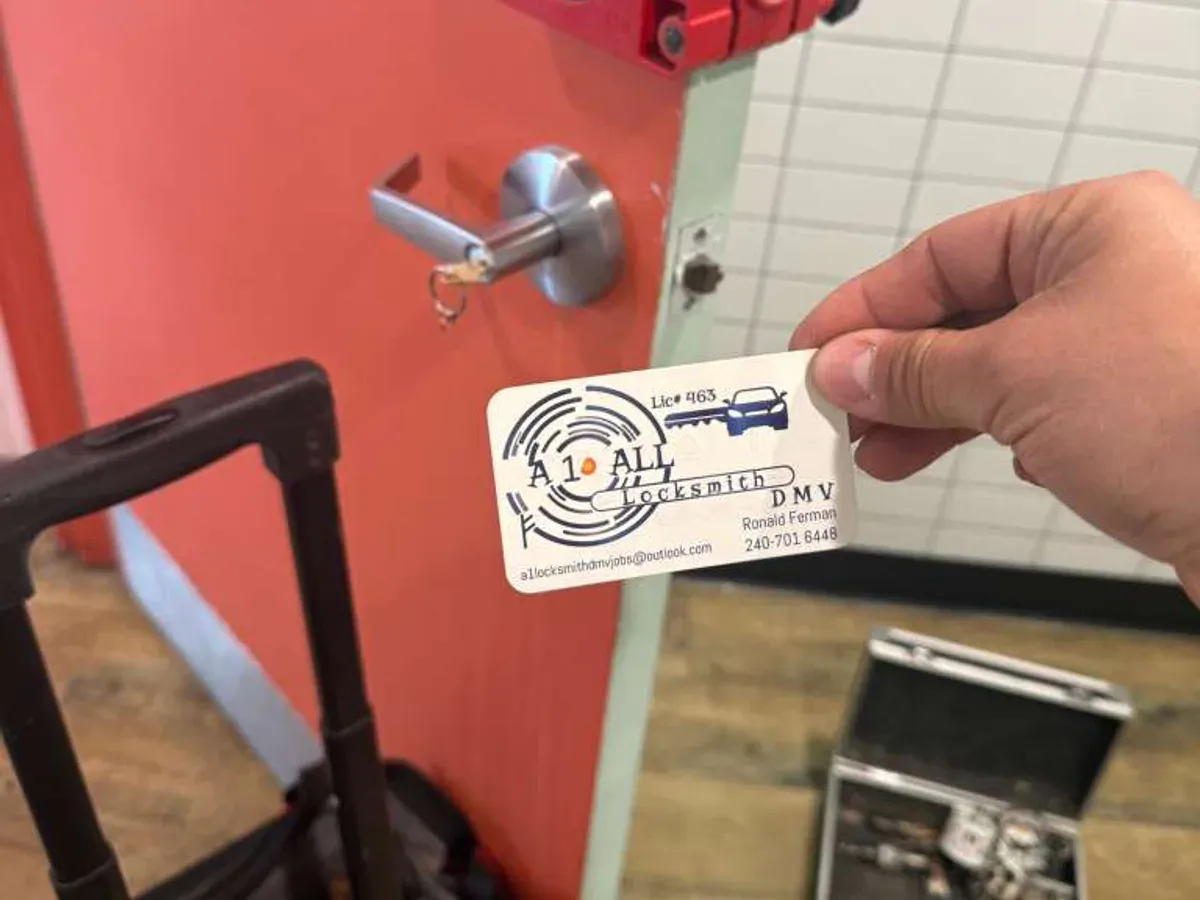
How we can help
Rekeying and replacing are not the same thing, and the difference is most of the money. Rekeying keeps the lock on your door and changes which key turns it — the cylinder is taken apart, the pins are changed, you get new keys and the old ones stop working. Replacing throws away working hardware. For anyone who has just moved in, or lost a key, or had a tenant or a roommate leave, rekeying is almost always the right answer and it costs a fraction of the alternative.
The one-key question comes up on nearly every visit. Most houses in this area have a front door, a back or patio door, and a garage entry door that the builder fitted on a different keyway for no reason anyone can explain. Those can normally all be rekeyed to a single key in one visit. The exception is when two cylinders are genuinely different keyways, and then one has to be changed to join in — which is worth knowing on the phone rather than discovering on the doorstep.
New construction deserves its own warning. In Clarksburg, Cabin Branch, Urbana Highlands and every other recent development, houses are handed over keyed alike across a whole phase, and during construction that key was held by framers, painters, cleaners, inspectors and the sales office. If a keypad came pre-fitted, the default code is often identical across the development too. Rekey the cylinder and change the code, and do both rather than one.
Not every stiff door is a lock fault. In older housing stock across Takoma Park, Chevy Chase and downtown Frederick, the most common call is a door whose frame has moved with the season so the bolt no longer lines up with the strike. That is an alignment adjustment, sometimes a longer screw into the stud, and it is far cheaper than the new lock people expect to be sold.
What is covered
- House and apartment lockouts
- Rekeying — keep the lock, change the key
- One key for every exterior door
- Deadbolt supply and installation
- Lock repair, latch and strike alignment
- Smart lock and keypad installation and setup
- Move-in and tenant-turnover security changes
- Mailbox, patio door and sliding door locks
- Master keying for multi-unit properties
Hardware and key types worked on
- Kwikset, Schlage, Baldwin, Defiant, Yale
- High-security and restricted keyways: Medeco, Mul-T-Lock
- Keypad and smart deadbolts with physical key override
- Mortise and rim locks in historic doors — repair and re-pin rather than replace
- Multipoint locks on French and patio doors
- Reinforced strike plates and longer-throw bolts
What it costs
Rekeying is priced per cylinder and gets cheaper per door the more doors are done in one visit, which is why it is worth counting them before you call. Lock replacement is priced by the hardware. House lockouts start at $89. Estimates are free.
Ask for the total estimate, including any applicable travel, labor, parts and after-hours charges. The final price is confirmed on site for your approval before work starts.
How the call goes
- 1Count your exterior doors before you call — front, back, side, garage entry — because that is what sets the price
- 2Say whether you want to keep the existing locks (rekey) or change the hardware (replace)
- 3Describe the symptom precisely: key will not turn, key turns but door will not open, lock is loose, door will not latch
- 4You get a price on the phone before a technician is dispatched
- 5The technician walks the doors with you and confirms the keying plan before touching anything
- 6Every lock and every new key is tested at every door before the visit ends